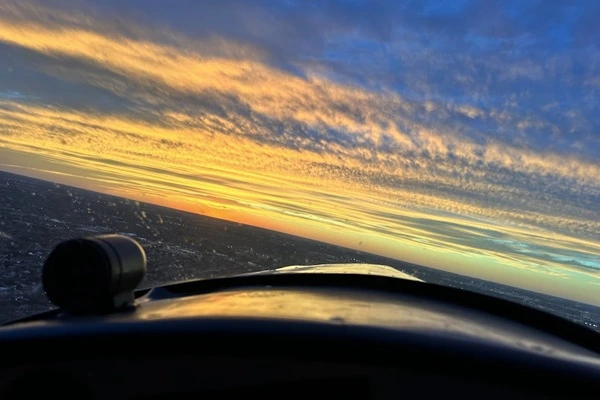
The Ticket to Freedom
Earning your Private Pilot License (PPL) is a transformation. You go from being a passenger to being a Pilot in Command. You will learn aerodynamics, weather, navigation, and the stick-and-rudder skills to safely operate an aircraft anywhere in the country.
Choose Your Path
We offer two distinct ways to earn your wings.
Pay-As-You-Go
Traditional flight training. Fly 1-2 times a week as your schedule allows. Pay for each lesson individually. Great for flexibility.
View Hourly Rates"No-BS" PPL Package
Accelerated and bundled. Includes headset, ground school, and priority scheduling. Designed for students who want to finish fast.
Explore PackageThe Journey
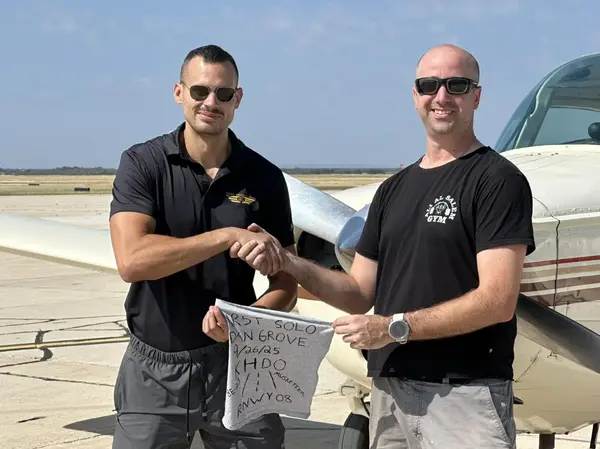
01. First Solo
The day you'll never forget. After mastering landings and emergency procedures, your instructor steps out, cuts your shirt tail (a long-standing tradition), and you take the plane up alone.
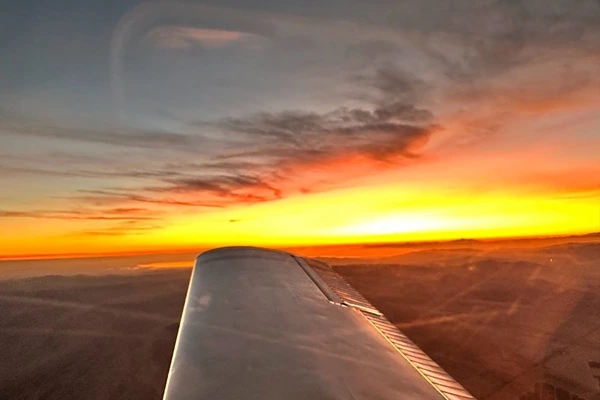
02. Cross Country
Learn to really travel. You'll plan flights to different airports, use VORs and GPS, and learn how to make real-world weather and airspace decisions.
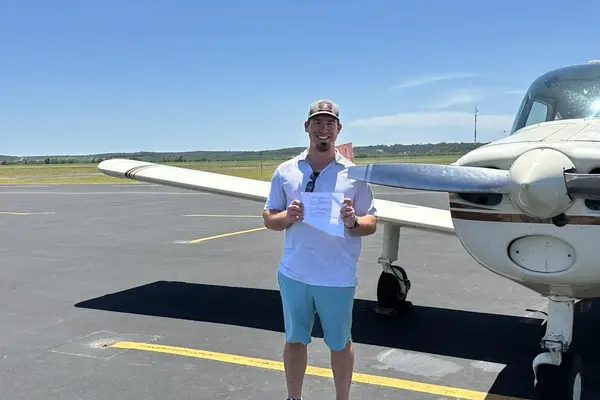
03. Checkride
The final boss. We prep you until the standards are second nature. You'll fly with a DPE (examiner), demonstrate your skills, and walk away a licensed Private Pilot.
The Blueprint
What it actually takes to earn the title "Private Pilot."
Eligibility
- ✓ 16 Years Old to Solo
- ✓ 17 Years Old to Test
- ✓ Read, speak, and understand English
- ✓ FAA Medical: You need at least a 3rd Class Medical Certificate (or BasicMed) before you can solo.
Flight Experience
FAA Minimums (Part 61)
- ✓ 40 Hours Total Flight Time
- ✓ 20 Hours Dual Instruction
- ✓ 10 Hours Solo Flight
- ✓ 3 Hours Night Training
- ✓ 3 Hours Instrument Training
- ✓ 5 Hours Solo Cross-Country
The Tests
-
1.
Knowledge Test (Written):
60 multiple-choice questions. Passing score is 70%. We help you prep for this.
-
2.
Practical Test (Checkride):
An oral exam and flight test with an FAA Designated Pilot Examiner (DPE). This is the final boss.
The "Knucklehead" Reality Check
While the FAA minimum is 40 hours, the national average is closer to 60–75 hours. We don't train you to the minimums; we train you to be competent. Budget for the average, and be happily surprised if you finish early. Consistency is key—flying 2-3 times a week is the cheapest way to get your license.