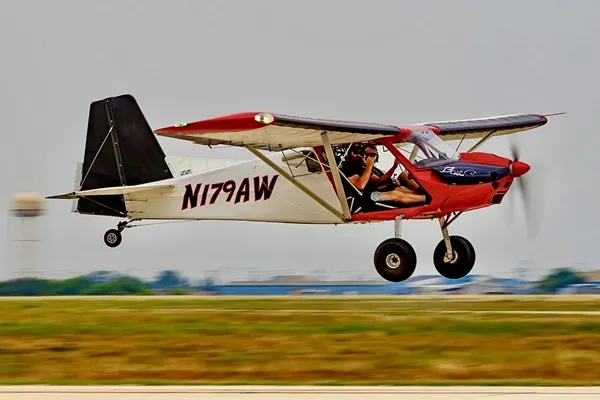
Why Fly Taildraggers?
Nosewheels are like training wheels—they let you get away with sloppy footwork. A taildragger keeps you honest.
Earning your endorsement isn't just about being legal to fly cool airplanes (like Cubs, Huskys, or our BushCat); it's about becoming a pilot who truly understands directional control, wind correction, and energy management.
Choose Your Path
Do it your way. Flexible hourly instruction or the immersive endorsement package.
Hourly / Flexible
Already endorsed and just want to fly the BushCat? Or want to learn at your own pace? Pay per hour for the plane and instructor.
View Hourly RatesWeekend Warrior Package
The all-inclusive endorsement course. 8 hours of flight time, ground school, and instructor time bundled into one discounted price.
View PackageThe Syllabus
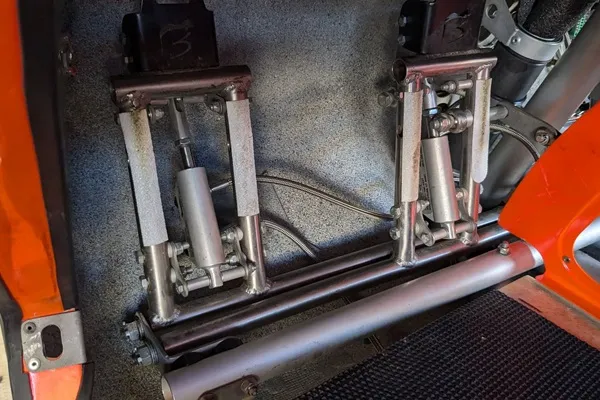
01. Ground Handling
It starts on the ground. You'll learn about Center of Gravity, weathervaning, and the art of keeping the nose in front of the tail while taxiing.
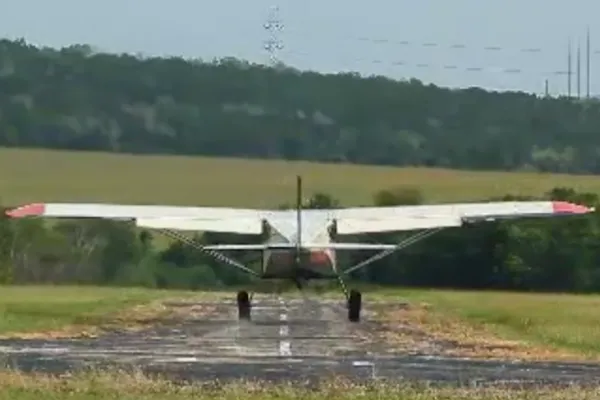
02. 3-Point & Wheel Landings
Master both techniques. You'll learn to "pin" it on long runways (Wheel Landing) and stall it perfectly into short strips (3-Point).
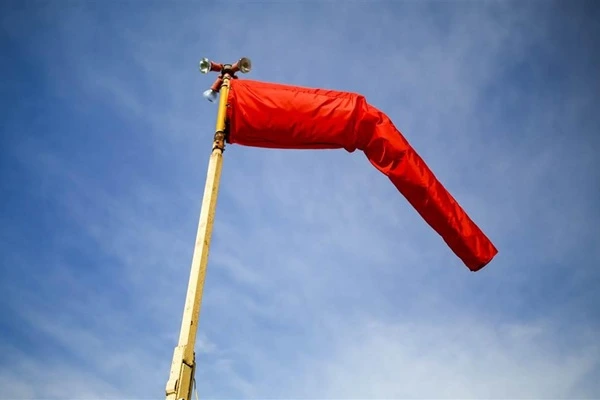
03. Crosswinds
The ultimate test. We will find the wind and teach you to "dance" on the rudder pedals to keep the longitudinal axis parallel to the runway.
The "Weird" Physics
If you trained in a Cessna 172, your muscle memory is wrong. Tricycle gear planes mask bad habits; tailwheels punish them. Here is exactly why.
1. The Wheel Landing Bounce
The Physics Trap: AoA & Momentum
In a taildragger, the Center of Gravity (CG) is behind the main wheels. When the mains touch down, that rearward momentum carries the tail downward.
The Problem: As the tail drops, the wing's Angle of Attack (AoA) increases. Since you are still at flying speed, this extra AoA generates lift instantly. The airplane creates its own takeoff and launches back into the air. This leads to increasingly violent bounces (porpoising).
The Fix
Pin it instantly. The moment the tires touch, you must apply forward stick pressure to kill the Angle of Attack and hold the plane on the deck.
"Too early and you wheelbarrow/prop strike. Too late and you bounce."
2. The Ground Loop
The "Reverse Shopping Cart"
Tricycle gear airplanes are naturally stable—like pulling a cart. Taildraggers are naturally unstable—like pushing a shopping cart backwards.
The Problem: With the heavy Center of Gravity behind the wheels, if the nose deviates even one degree from the centerline, the momentum of the tail will try to overtake the nose.
The further it swings, the faster it accelerates. If you wait to "see" the turn, it is already too late to stop it.
The Fix
Dance on the pedals. You aren't correcting a turn; you are preventing one from starting.
"Most ground loops happen at taxi speed when the pilot relaxes."
Never Quit Flying the Wing
You're busy keeping the nose straight, but don't get tunnel
vision on the rudder. The crosswind or yaw can lift a wing.
Yaw down low (at the wheels) induces roll.
"Fly it all the way to the chocks. Don't relax until the
engine is off."
The Perfect 3-Point
Fly it exactly like a wheel landing until you are 1-2 feet off
the deck. Then, transition to backpressure.
Pull, pull, pull until you hit full deflection. Keep the stick
buried to pin the tail to the ground.
The BushCat "Lie"
From the left seat, the BushCat feels like it's pointing right
when it's straight.
The Fix: Find a "guidestone"—a specific rivet
on the cowl that lines up with the centerline. Trust that
spot, not your feelings.
She's a Lady
Be soft. Relax your shoulders. If you fight her, you will
lose.
"All she wants is exactly what she wants, exactly when she
wants it."
The "Quiet" Arrival
"Quiet" doesn't mean sound; it means stability. If you are
drifting, yawing, or sinking, the airplane is "screaming"
relative to the runway.
The Rule: Make the airplane boring before you
let it touch. If it's still moving around, you aren't ready to
land.